ESTRATEGIA URBANA • FEBRERO 20, 2024
¿Cómo recuperar el centro histórico de lima de manera sostenida y permanente?
Ivan Mesarina
Senior Partner
SHARE
RESUMEN EJECUTIVO
- La recuperación sostenida del Centro Histórico de Lima exige reconstruir el ecosistema urbano que alguna vez integró vivienda, comercio, instituciones y vida cotidiana.
- El retorno de familias de clase media, empresas privadas e instituciones generaría mayores flujos de residentes, visitantes, oficinistas y trabajadores.
- Para lograrlo, se requieren incentivos inmobiliarios, mejoras de accesibilidad, seguridad ciudadana, ornato público y una gestión normativa más ágil.
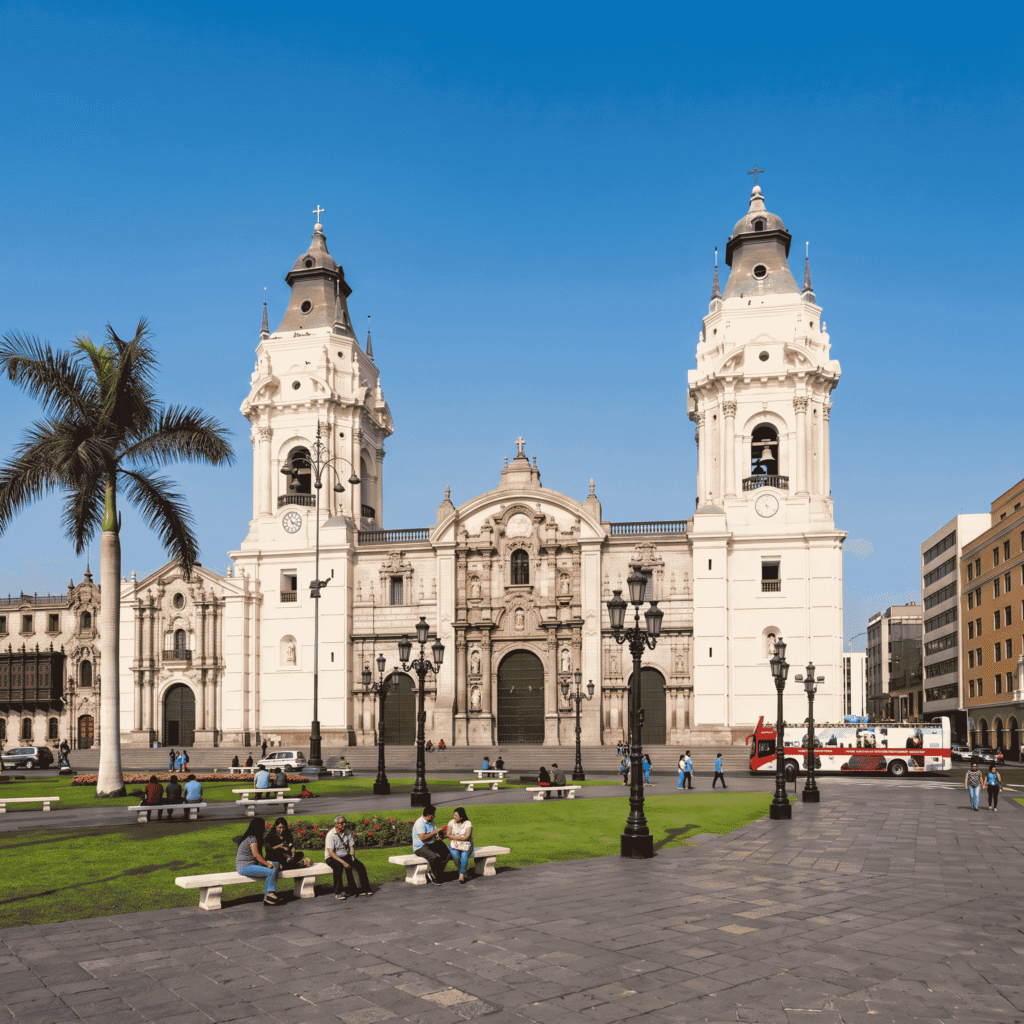
En una nota previa publicada en enero de 2024, BrandinMind planteó que el deterioro del Centro Histórico de Lima no puede explicarse únicamente por el paso del tiempo o la falta de mantenimiento. El problema de fondo fue la pérdida progresiva del ecosistema urbano que, a inicios del siglo pasado, sostenía la vida social, comercial e institucional del Centro.
Recuperar ese equilibrio implica mucho más que intervenir calles, edificios o monumentos de manera aislada. La transformación debe atraer nuevamente a empresas privadas, instituciones y familias residentes de clase media, de modo que el Centro vuelva a tener flujos permanentes de personas y actividad económica.
Solo así los residentes, visitantes, oficinistas y trabajadores podrían generar los ingresos necesarios para sostener el ornato, la seguridad, la conservación patrimonial y la belleza urbana del Centro Histórico.
Recuperar el ecosistema urbano del Centro
Las propuestas desarrolladas por BrandinMind surgieron a partir de un encargo de investigación y consultoría realizado a fines de 2023. Como resultado de ese trabajo, se incubó un conjunto de medidas discutidas con la Municipalidad de Lima y con la autoridad responsable del ornato del Centro Histórico.
El objetivo no era plantear una recuperación temporal, sino diseñar condiciones para una transformación sostenida. Para ello, el Centro debe volver a ser atractivo para vivir, invertir, trabajar, visitar y desarrollar actividades económicas formales.
La recuperación permanente exige actuar sobre varios frentes al mismo tiempo: promoción inmobiliaria, financiamiento, flexibilización normativa, movilidad, estacionamientos, seguridad, iluminación y control del espacio público.
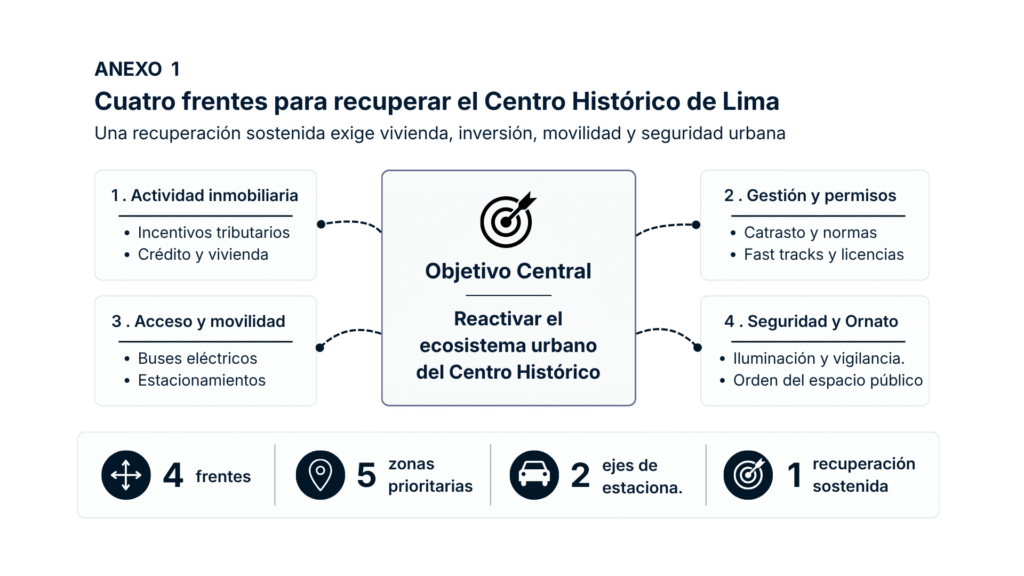
Anexo 1: Frentes de acción propuestos para recuperar el Centro Histórico de Lima de manera sostenida. Fuente: BrandinMind, 2024.
La lógica de las propuestas es integral. No basta con promover vivienda si el entorno no ofrece seguridad, movilidad y servicios. Tampoco basta con mejorar el ornato si no existen residentes, empresas e instituciones que generen actividad constante y recursos para sostener la intervención en el tiempo.
Por ello, la recuperación del Centro Histórico debe entenderse como una estrategia de reactivación urbana. Cada medida debe contribuir a que más personas puedan vivir, trabajar, invertir y circular en el Centro bajo condiciones adecuadas.
Incentivos para volver a invertir y habitar el Centro
Una parte central de la propuesta consiste en facilitar la inversión privada en edificios antiguos, nuevos desarrollos inmobiliarios y proyectos de adecuación para renta o vivienda.
Entre las medidas planteadas se encuentran la facilitación de la Devolución Anticipada del IGV para desarrolladores e inversionistas, la reducción o diferimiento de la Alcabala, el diferimiento del Impuesto Predial y del Impuesto a la Renta por reinversión de utilidades.
También se propone crear un fondo y sistema de crédito específico para el Centro Histórico de Lima, inspirado en el modelo de MIVIVIENDA, pero con un valor tope de financiamiento mayor. Esta herramienta permitiría hacer más viable la compra o adecuación de inmuebles dentro del Centro.
A ello se suman incentivos para la acumulación de lotes y unidades inmobiliarias, la revisión del catastro, la ampliación de compatibilidad de usos y la flexibilización de parámetros urbanísticos sin alejarse del Plan Maestro del Centro Histórico.
“El Centro Histórico no se recupera únicamente restaurando edificios; se recupera cuando vuelve a ser atractivo para vivir, invertir, trabajar y permanecer.”
— BRANDINMIND
Normas, movilidad y seguridad como condiciones de permanencia
Para que la inversión ocurra, el marco de gestión debe ser más ágil. El documento propone mecanismos como una comisión técnica para proyectos inmobiliarios y urbanísticos de gran escala, fast tracks para licencias de edificación, declaratorias de fábrica y licencias de funcionamiento, además del uso del silencio administrativo positivo para ciertos trámites.
La accesibilidad también aparece como una condición clave. Se plantea implementar un sistema de buses eléctricos de la Municipalidad de Lima dentro de la zona peatonalizada, revisar el número de estacionamientos exigidos para proyectos residenciales y promover estacionamientos públicos y privados mediante facilidades tributarias y líneas especiales de financiamiento.
Finalmente, la seguridad ciudadana y el ornato público deben sostener la recuperación del entorno. Las medidas incluyen mayor iluminación, videovigilancia y presencia del Serenazgo y la Policía en zonas como Monserrate, Quilca, Washington, Rufino Torrico y Barrios Altos. También se plantea erradicar el comercio ambulatorio en Mesa Redonda y Mercado Central, así como limitar las marchas de protesta dentro del Centro Histórico.
La recuperación del Centro Histórico de Lima no puede depender de intervenciones aisladas ni de esfuerzos temporales. Requiere una estrategia capaz de alinear inversión privada, gestión pública, vivienda, movilidad, seguridad y conservación patrimonial.
El desafío es volver a convertir el Centro en un lugar donde la ciudad no solo recuerde su historia, sino donde también pueda vivir, trabajar, invertir y proyectar futuro.
Transform Your Strategic Outlook
Related Insights
View all publications →
ORGANIZATIONAL STRATEGY
March 28, 2026

ORGANIZATIONAL STRATEGY
March 28, 2026